
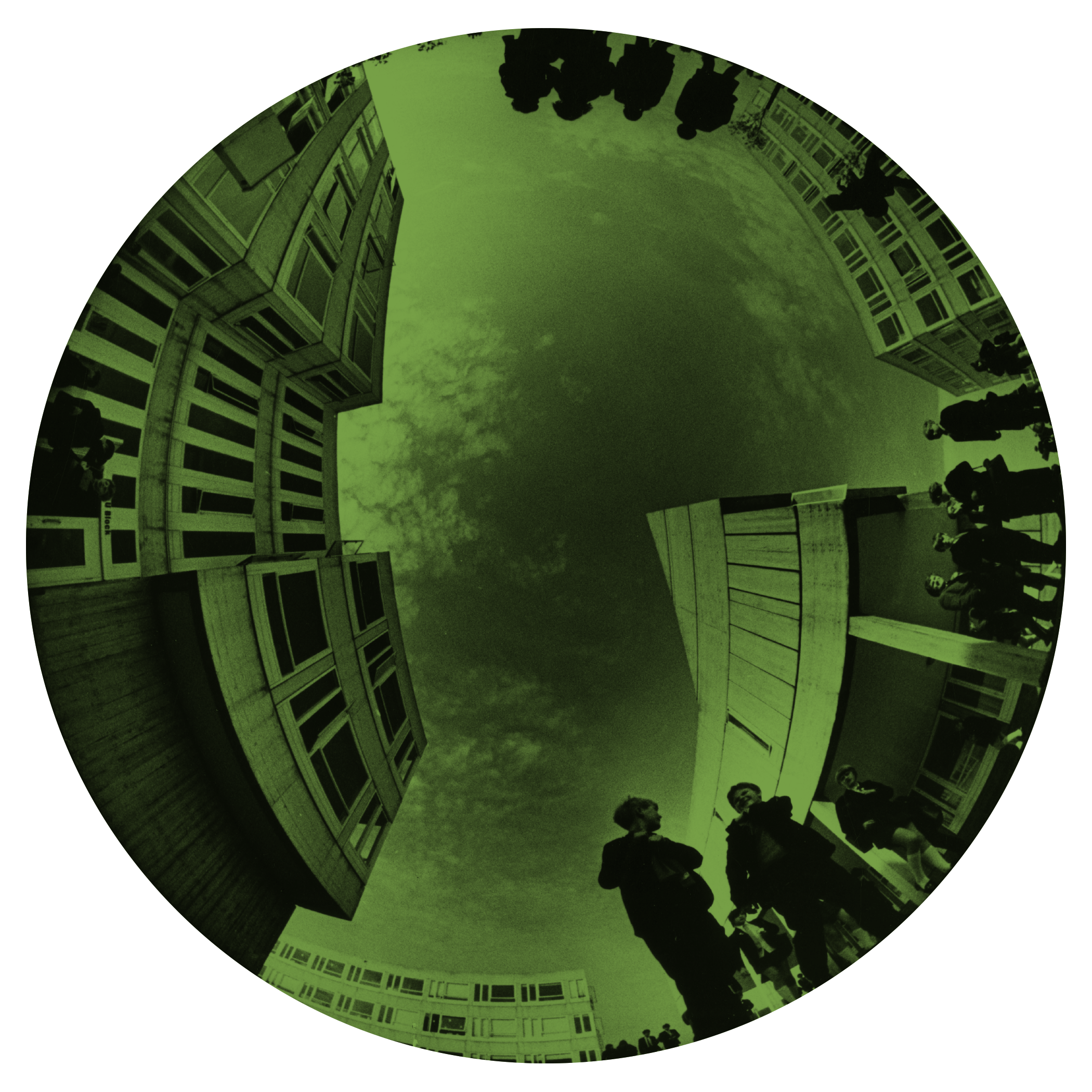
By tom Smith,Architectural Press Archive/RIBA Collections
11th SOPHIA JOURNAL INTERNATIONAL CONFERENCE | 25 / 26 September | Portuguese Architects’ Association — Northern Regional Section (OASRN)
CONFERENCE LIVE STREAMING YOUTUBE . FAUP
https://www.youtube.com/live/Zvsnrhaf4cg?si=fjc65NuZ1nU72eN7
Host Institution
Portuguese Architects’ Association — Northern Regional Section (OASRN)
Program and Book of abstracts
Book of abstracts
The 11th Sophia Journal International Conference will present a live program organised by Portuguese Architects’ Association — Northern Regional Section (OASRN), Faculty of Architecture, University of Porto (FAUP) | CENP — Nuno Portas Centre for Architectural Studies and Culture Centre, Technical University of Porto — UTP / FMAD / ID+, continuing the successful annual cycle of international forums dedicated to the critical exploration of the intersections between image and architecture.
Sophia Journal international conferences and are closely aligned with Sophia's peer-reviewed publication.
The 11th Sophia Journal International Conference — Landscapes of Repair: The Invisible City: Manplan and Contemporary Forms of Repair will take place in Porto on 25 and 26 September 2026, with an in-person programme and online streaming.
From the Legacy of Manplan to Contemporary Practices of Repair
The 11th International Conference continues the programme Wide-Angle View: Architecture as Social Space in the Manplan Series 1969–70, developed at OASRN throughout 2026.
The Wide-Angle View exhibition, which opened on 27 February, revisited the influential photographic series Manplan and was accompanied, between March and May, by a programme of guided visits, public conversations, educational activities and round tables that sought to bring the critical memory of this editorial experiment into dialogue with contemporary questions surrounding housing, the city, public space and representation.
The conference does not bring this process to a close. On the contrary, it extends it, bringing the legacy of Manplan into dialogue with contemporary practices of visual research, representation and intervention, while asking how looking, documenting and making visible may themselves constitute a first form of repair.
Programme — 25 September 2026
09:15 — Reception and Registration
09:30–09:40 — Institutional Opening
Bruno Marques
President of the Northern Regional Board of the Portuguese Architects’ Association
09:40–09:50 — Introduction to the Sophia Journal Cycle at FAUP
José Pedro Sousa
representing FAUP
09:50–10:00 — Official Launch of the Call for Sophia Journal Vol. 12
Learning Repair: Situated Pedagogies, Civic Landscapes and Visual Practices
Pedro Leão Neto
representing CENP
10:00–10:45 — KEYNOTE
Valeria Carullo
Revisiting Manplan: Archive, Visibility and Public Responsibility
10:45–11:05 — Coffee Break
11:05–12:45 — PANEL 1
Making the Invisible City Visible: Memory, Image and the Politics of Representation
Guiding question
What can images make visible that conventional architectural representation leaves unseen — and when can visibility itself become a form of repair?
Chairs: Hugh Campbell & Cristina Gastón
Papers
Sunyoung Park
Photosculpture as a Form of Care and Repair: Re-materialising the Invisible City after Manplan
Ljubica Miric
Remembering the Future City: From Imagination to the Urban Condition
Jared Fantasia & João Soares
Lessons from the Ground: An Architectural Essay on Robert Smithson and the Reclamation of the Post-Industrial Landscape
Visual Essay
Aislinn McCarthy & Evelyn Ågren — A Visual Account of Home as a Situated Place of Resistance
Adrian Aleson & Fernanda del Villar — [Re]Building a Wall
Discussion
12:45–13:45 — Lunch Break
13:45–15:15 — PANEL 2
Repairing the Built: Heritage, Memory and Practices of Re-inscription
Guiding question
How can architecture intervene in what remains without erasing the histories, memories and absences through which the built environment has acquired meaning?
Chair: Ana Miriam Rebelo
Papers
Ana Sofia Pinto & João Pedro Bragança
Back to What Never Was: The Re-inscription of the Monastery of Santa Maria do Mar
Andrea Crudeli
Adaptive Reuse as Critical Repair: The Case of Massimo Carmassi in Pisa
Ana João Costa e Silva
Preserve the Pozzuoli Cathedral: Between Safeguarding the Remaining and Perpetuating the Vanished
Visual Essay
Diana Nichita
Visibility as Repair: Reading Bucharest’s Hidden Layer
Discussion
15:15–15:30 — Coffee Break
15:30–17:10 — PANEL 3
Critical Cartographies: Peripheries, Ordinary Spaces and Hybrid Territories
Guiding question
How can alternative forms of mapping and visual inquiry make peripheral, informal and ordinary territories legible without reducing the complexity of the lives, practices and systems that produce them?
Chair: Maria Neto
Papers
Paulo Moreira
Counter-Mapping as Reparative Practice: Introducing 3D Voice and the Politics of Spatial Representation in Stjwetla, Johannesburg
Francisca Machado & Eduardo Fernandes
Repairing with Memory: Informal Practices and the Rehabilitation of the Ilha da Bela Vista
Francisco Côrte
Food and Leisure: Visual Practices for Mending the City/Countryside Relationship
Visual Essays
Ana Brandão & João Cunha Borges
Mapping Ordinary Public Spaces: A Visual Investigation of Lisbon’s Suburbs
Tomita da Silva
Layers in Motion: Visualizing Hybrid Landscapes on Porto Metropolitan Area’s Northern Seaboard
Discussion
17:10–17:20 — Short Break
17:20–18:45 — PANEL 4
Reparative Practices: Care, Cohabitation and Possible Futures
Guiding question
What does it mean to practise repair — not as the restoration of a previous condition, but as the creation of new relations of care, recognition, cohabitation and possibility?
Chair: Raquel Paulino
Papers
Mounira Zennia
“Public Use” – Strategies of Repair in Cameron Rowland’s Amt 45 i
Filipe Lourenço
Architecture as Identity Repair: Visibility, Practice, and Post-Independence Algeria (1962–1979)
António Olivera
Speculative Repair and Urban Dysfunction: A Wittgensteinian Reading of the Contemporary City through Lisbon
Visual Essay
Anna Positano / Corpi Idrici / Gaia Cambiaggi
Underground Habitats and Post-Industrial Ecosystems
Discussion
18:45–19:00 — Closing Remarks and Final Synthesis
Cristina Gastón & Hugh Campbell
Guest Editors
Ana Miriam Rebelo, Maria Neto & Raquel Paulino
Editors
26 September — Parallel Programme: From Research to the Public and Editorial Realm
On the second day, the conference, held in the auditorium of the Culture Centre, Technical University of Porto — UTP, opens up to a more editorial, professional and public dimension, extending the scientific discussions through two encounters dedicated to photography, architecture, publishing and the construction of cultural legacies.
The morning begins with LFA Talks — Publishing an Award, Extending a Legacy, dedicated to the publication LFA Award: A Contemporary Look at Architecture and to the ways in which an international photography award can move beyond the competitive moment to generate an archive, publishing projects, critical debate and cultural continuity.
Moderated by Jorge Sobrado, the conversation will bring together Hugh Campbell, Cristina Gastón, Judit Torres and Gabriel Hernández.
This will be followed by A City for Everyone | Seeing Photography, with Aníbal Lemos and José Manuel Rodrigues, in a conversation devoted to the relationships between photography, architecture, society and the human experience of the city, with Olívia Marques da Silva proposed as moderator.
Programme — 26 September 2026
09:30–09:35 — Opening of the Parallel Programme
Olívia Marques da Silva
Culture Centre, Technical University of Porto — UTP / FMAD / ID+
A brief introduction to the programme for the conference’s second day and its relationship to the public, editorial and cultural dimensions of Landscapes of Repair.
09:35–09:45 — LFA Award 2026–27 | Presentation of the 2nd Edition
Pedro Leão Neto
Presentation of the 2nd edition of the Luis Ferreira Alves Photography Award — A Contemporary Look at Architecture, whose Open Call officially launched on 25 September 2026, introducing the award’s international framework and objectives, the new cycle of submissions, and the associated programme of prizes, exhibition, publication and dissemination.
09:45–11:10 — LFA Talks — Publishing an Award, Extending a Legacy
Moderator: Jorge Sobrado
Guests:
Hugh Campbell
Cristina Gastón
Judit Torres
Gabriel Hernández
11:10–11:30 — Coffee Break
11:30–13:00 — A City for Everyone | Seeing Photography
Aníbal Lemos and José Manuel Rodrigues
Proposed moderator: Olívia Marques da Silva
13:00–14:30 — Lunch Break
From the Conference to the Territory — Visit to Quinta da Conceição
During the afternoon, the conference moves from the Culture Centre to Quinta da Conceição, in Matosinhos, shifting the discussion from theoretical and visual reflection towards a situated observation of the territory.
14:30 — Departure for Quinta da Conceição
15:00–17:30 — Study Visit — Quinta da Conceição | From Heritage Object to Civic Landscape: Architecture, Use, Maintenance and Repair
17:30 — Closing of the Conference on Site
The visit proposes an understanding of Quinta da Conceição not simply as a heritage ensemble, but as a living civic landscape, where historic heritage, modern architecture, public space, vegetation, water, everyday uses and processes of maintenance continually intersect.
By concluding in the field, the conference establishes a direct relationship between critical visibility and experience, while also anticipating some of the questions that will structure the next thematic cycle of Sophia Journal: how might we learn to repair through attentiveness to place, visual research, situated pedagogies and a collective responsibility towards the spaces we inhabit?
Sophia Journal: Research, Image and International Debate
Sophia Journal has increasingly established itself as an international forum for research and critical debate at the intersections between architecture, photography, film and other visual practices.
Its international conferences reinforce this dimension, creating opportunities for encounters between researchers, architects, artists, photographers, students and professionals from different geographical and disciplinary contexts, in a dialogue closely connected to the journal’s academic and editorial programme.
The abstracts of the contributions presented at the conference will be brought together in an e-book of abstracts, which will also include the conference programme and will be made freely available through the Sophia Journal OJS platform.
Subsequently, the contributions considered most relevant, developed and expanded as full research papers or visual essays and subject to the appropriate editorial and peer-review processes, will be published in:
Sophia Journal — Volume 11, No. 1
Landscapes of Repair: The Invisible City: Manplan and Contemporary Forms of Repair
Through this 11th International Conference, Sophia Journal seeks to create a space in which critical memory, visual research and design imagination can converge around an increasingly urgent question: how can we recognise what needs to be repaired, and how might architecture and images contribute to new forms of attention, care and collective responsibility?
For further information:
info.sophiajournal@arq.up.pt
